
India is developing a 'Gross Domestic Knowledge Product' (GDKP) to identify and define its knowledge assets, a move aimed at safeguarding them amidst global efforts to monetise and 'weaponise' knowledge, according to NITI Aayog member R Balasubramaniam.

Chief Economic Advisor V Anantha Nageswaran stated that 2026 marks an inflection point for India, akin to 1991, necessitating the country to become globally indispensable in carefully chosen sectors to build strategic leverage for accessing geopolitically contested resources amidst a series of external shocks.

Despite recent foreign portfolio outflows, India's long-term investment prospects remain strong, but the return of capital hinges on global financial conditions, relative valuations, and the country's ability to attract sustained foreign investment, according to foreign bankers at the Business Standard BFSI Insight Summit.

India's first trillion-dollar company will be built on technology it owns, not just operates, predicts Ajay Kumar.

'As a nation, we create beautiful content and a high volume of it (films) but we are limited by the number of theatres and screen density.' 'You now have a living-room large screen available to showcase that.'

Learning from East Asia, India must reform its district administration with performance, accountability, and vision to achieve the goal of Viksit Bharat, points out Deepak Mishra.

Let's work flat out and create a policy framework that fosters the growth of Indian non-family business VC and private equity firms. This will allow our Indian startups' dreams to flourish, explains Ajit Balakrishnan.

'We don't have to compete with Maharashtra or Gujarat. We have to now start thinking about how we compete with the United States or China.'


The visitor returns not just with the jewel-like beauty of the country imprinted on the mind, the body rejuvenated by hot stone massages, but also with the captivating stories and myths that are built into every important structure -- whether a tourist magnet or an off-the-beaten track spot.

After disappointing guidances in the first quarter (Apr-Jun) of the 2023-24 financial year (Q1FY24) and valuation downgrades, the Indian IT sector could see some positive repricing as the bad news for IT maybe easing in Q2FY24. A key negative factor was weaker demand from the US financial sector and from North America in general. The latest GDP (gross domestic product) estimates and sector-specific news suggest that the demand situation may not be quite so bad with a gradual recovery in tech spending in Q2.

The Axis Bank share sale was launched on Thursday in an indicative price band of roughly Rs 1,290 to Rs 1,357 a share.

Subsequent data revisions revealed that growth had not slowed that sharply.

'I believe that as we produce more, our cost will come down further. We will maintain our competitiveness.'

The impact of 'family first' on productivity in developing societies is yet to be modeled, says Agnikalam.

A global failure to respond to climate changes could result in about 8.7 per cent economic loss in India's Gross Domestic Product (GDP) by 2100, Asian Development Bank said.

The magnitude of the economic losses will depend on how the outbreak evolves, which remains highly uncertain.

There are several discussions going around in the e-health sector for consolidation with key players being PharmEasy, 1mg, Medlife and Netmeds. According to reports, Reliance Jio is in talks with Netmeds to acquire the latter.

According to the global business information, knowledge and insight provider, India is likely to achieve an average growth rate of around 7.5 per cent during FY15-FY20.

The only real solution to the jobs crisis, whether in India or abroad, is to direct tech innovation towards job enhancing sectors, and disincentivising job-replacing ones, observes R Jagannathan.

The report suggests India in the longer term needs to create far more jobs in the formal organised sector -- 97 per cent of all female worker activity is in the informal sector
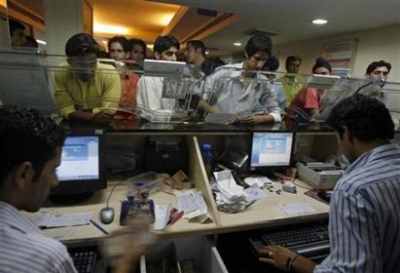
Private banks are assumed to be more efficient at intermediating between depositors and investors.

Rediff Labs analysed the data on happiness, peace and human development for countries all over the world.

Since 2000, India has had three serious droughts.

FM is seen to step up the pace of sales of state assets and curb spending
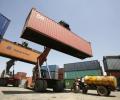
On the other hand, 16 or half of all states and Union Territories account for only 3 per cent of all exports.

It is not the job of regulators to ensure that users make profits. It is not the job of regulators to prevent people from making losses. It is not the job of regulators to prevent people from doing stupid things, argues Ajay Shah.

Vodafone's Kisan Mitra will provide a spectrum of services for India's small farmers, simple mobile service interventions that can increase a farmer's income by Rs 8,000 per year.
Most forecasts do not have a track record of transparency and accuracy

As an admirer of Japan for close to half a century, I care for Japan and expect Suga to respect the sentiment of his people and cancel the Olympics without further delay, says Rajaram Panda.

India's decrepit state-run train services stand to receive at least a 25 per cent boost in investment to over $9 billion.

While naysayers say the economy is on a downward spiral, optimists point out that India has experienced a shift of gears in the realm of policies, thanks to several initiatives of the Narendra Modi government, says Ashok K Lahiri.

Officials say a fall in global oil prices will reduce the government's subsidy burden, giving it a greater chance of hitting its ambitious fiscal deficit target of 4.1 percent of gross domestic product in the fiscal year to March.

The estimates of national income and growth do not pass the 'smell test'.

As the country readies to go to polls on July 25, one can't deny the role of the military, but there are other factors too.

Make in India campaign has huge potential.

A comprehensive solution involves a complete overhaul of our education and training model.
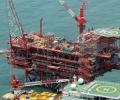
The government will decide in August whether to sell a 5 percent stake in ONGC, a senior oil ministry official said, in a deal that would be worth $2.9 billion at current market prices.

Other large recipients are China ($64 billion), the Philippines ($28 billion), Mexico ($24 billion), Nigeria ($21 billion), Egypt ($18 billion), Pakistan ($17 billion), Bangladesh ($15 billion), Vietnam ($11 billion) and Ukraine ($9 billion).

In 2014-15, capital expenditure in the April-September period was Rs 99,100 crore.
